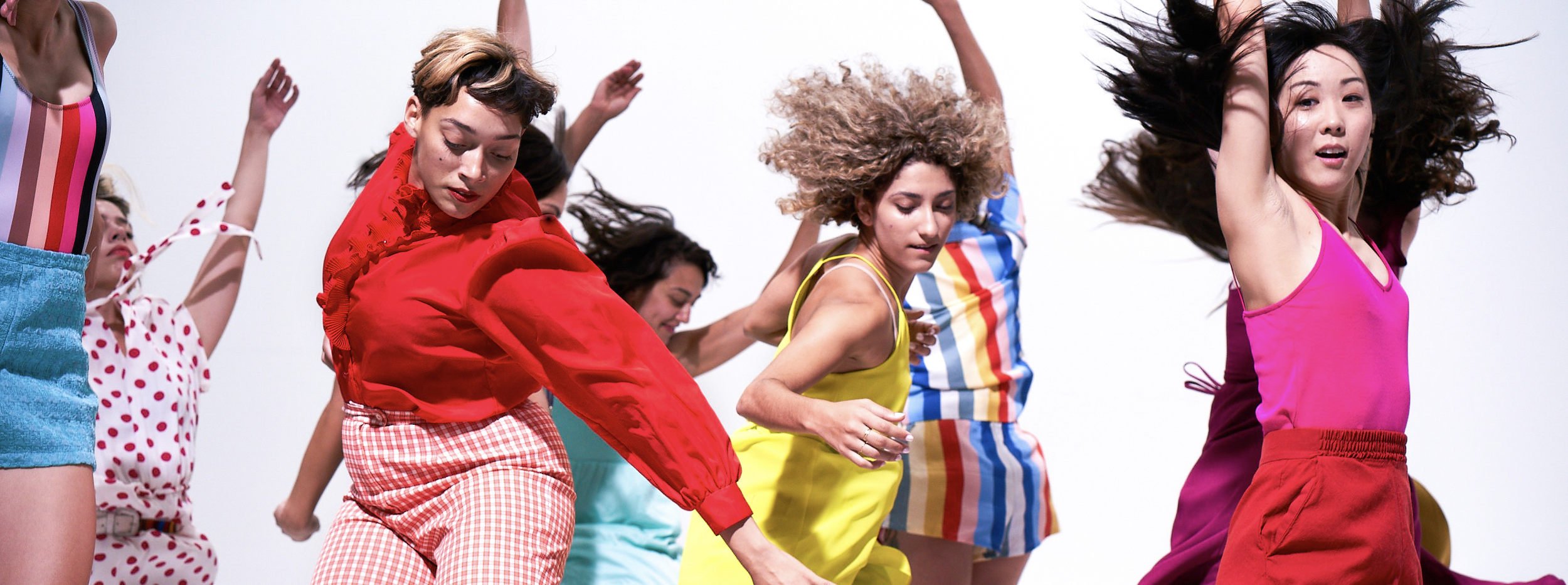
Dance education in communities and schools can be responsive, expressive, and uplifting. IMOD, designed to empower and unite students and educators alike, supports dynamic community and school-based education programs. The programs take a unique approach to dance education combining arts, business, culture, and health and wellness. IMOD’s Global Education Programs use the art form to inspire confidence and self-expression.
Movement is a powerful teaching tool that empowers people to make something out of nothing.
IMOD’S GLObAL EDUCATION PROGRAM
The IMOD Global Education Program is a multi-faceted umbrella program that is aimed to foster coordination, creativity, and confidence through dance education, mentorship and project-based programming that incorporates storytelling, teamwork, cultural awareness, and the power of movement.
The IMOD Global Education Program is divided into the School Residency Program and the Cyclical Mentorship Program. The programs are created for all-ages and levels of dance knowledge and each program is based on a standard set of learning objectives, plus is customized to meet the specific needs of the school, school district, or group of students.
Click on the links below to learn more detail about each program and complete the interest form or application to engage with the IMOD staff.
GLOBAL EDUCATION PROGRAM GOALS:
Physical Wellness - Improve coordination, flexibility, and overall fitness.
Cultural Education - Explore the global and local history of hip-hop dance.
Social-Emotional Learning - Build self expression, teamwork, and confidence.
Community Engagement - Create public performances that amplify youth voice.
Impact Assessment - Collect data and stories to evaluate long-term effectiveness.
IMOD Education Team

CLYDE EVANS, JR.
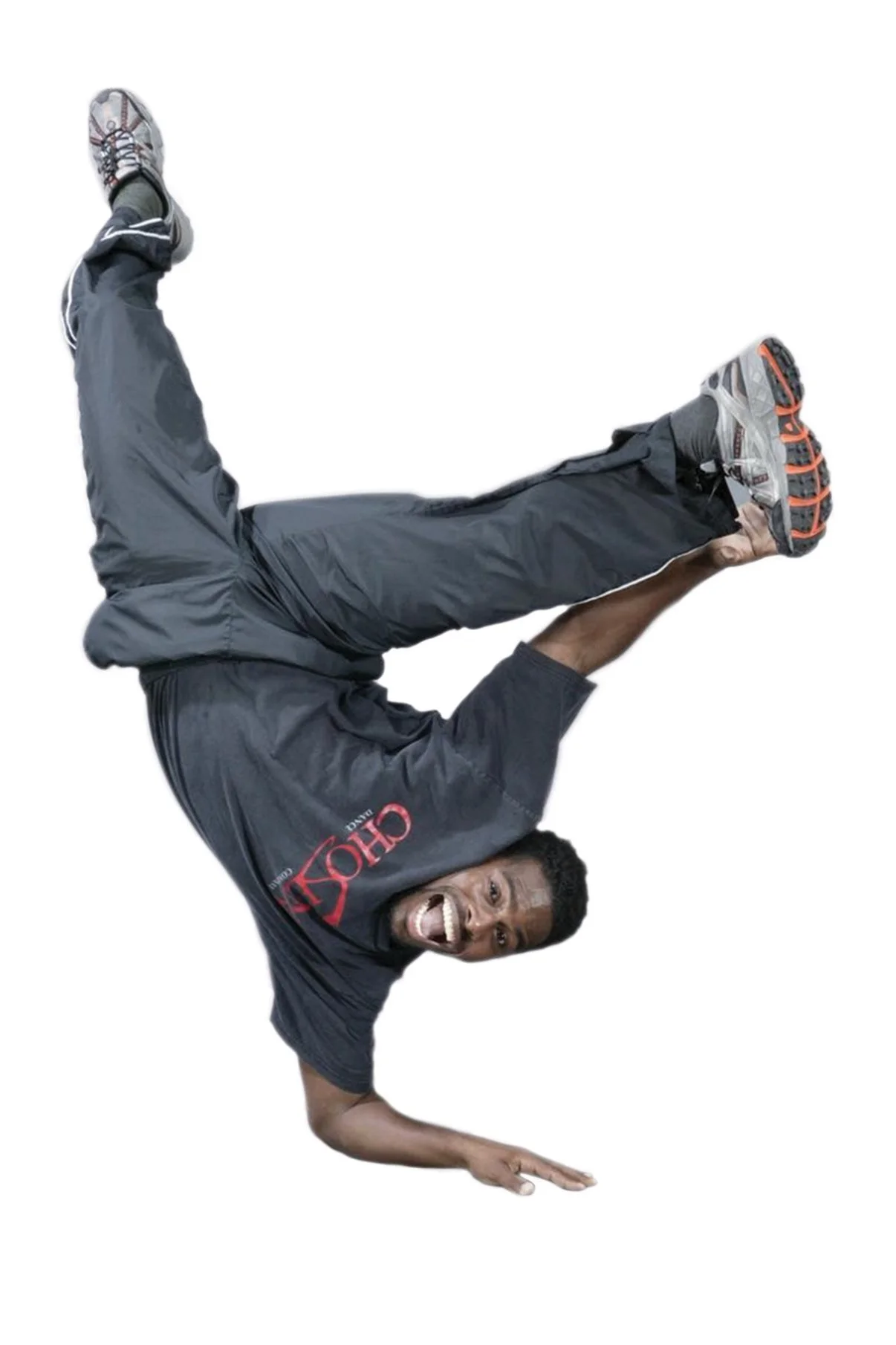
Clyde Evans, Jr., (he/him) is not only an accomplished dancer, choreographer, and teacher, he serves as the IMOD Director of GEP School Residency Program & Hip-Hop Dance. Clyde has an extensive career as a performer that led him throughout the world to places such as Africa, Italy, London, Brazil, France, Finland, and Australia.

GABRIEL CARRION-GONZALES
Gabriel Carrion-Gonzales (he/they) serves as the IMOD Co-Director of GEP Cyclical Mentorship Program & Indigenous Dance. He continues to be inspired by Marie Carrion-Mcafee, his fearless mother who demonstrates self-love, boundary-setting, and speaking from an authentic heart. As a dance artist and arts administrator, Gabriel is interested in being a connector of two worlds; one in his head/dream space and this physical realm we co-inhabit.
3-D Learning Opportunities
Dance in 3-D with Hip-Hop legend Clyde Evans, Jr.! Students and educators can dive into the groove with our 3-D mobile and desktop application—it’s like having a dance party in your pocket! Using 3-D filming technology, Evans breaks down how to do popular dance steps in the comfort of your home or classroom. Just open the app on your phone and tap to have Evans demonstrate on any surface by integrating our 3-D video with your phone’s camera. Let’s keep the rhythm going!

Click to learn how to do the Roger Rabbit.

Click to learn how to do the Reject.

Click to learn how to do the Spongebob.
What Is the Impact of Dance?

Dance connects people across borders and communities, is practiced by every culture world-wide, and touches all races, genders, ages, socioeconomic levels and people. Dance also has the ability to support those suffering with terminal physical and mental illness.
Research in the field of dance is able to draw connections between dance and mental/physical health. Other topics IMOD is interested in supporting research in includes: the impact of dance as a form of cultural storytelling, dance as connective human engagement, the impact of dance on childhood development in areas of soft skills, the importance of dance in schools, why people dance, and why dance impacts more than just fitness levels.
Dancing is therapeutic, allowing students to express emotions and stay present through physical movement. Research into the neuroscience of dance shows it can increase synchronicity between brain regions, leading to improved coordination and enhanced neurobehavioral effects. Dancing increases neuroplasticity, the brain’s ability to change and adapt.
Research has shown dance has positive effects on physical and mental health, including:
Improving mood
Lowering anxiety and stress
Improving memory
Improving attention
Improving body balance
Reducing levels of cortisol caused by chronic stress
IMOD’s interest in dance is beyond the expression of movement. Dancers gain skills such as time management, teamwork, the importance of rest and recovery, honoring commitments, peer management, personal responsibility, and creative decision-making. All of these are transferable skills in high-demand with employers, which is an area of research unexamined thus far. IMOD is interested in leading and facilitating research in workforce and economic development for dancers, experiential learning models for dancers in the arts and in business, plus outcomes for dance educators and their long-term impact on students. IMOD aims to support a longitudinal study in these areas to track educational, career, and health impacts over an extended period of time.

Clyde Evans, Director of MODOLOGY EDUCATION